
Why Emotional Hooks Outperform Humor in Mobile Game Ads (2026)


In mobile game advertising, emotion directly impacts performance. And there’s a simple insight:
Humor grabs attention — but emotion drives conversions.
Compassion and a sense of responsibility consistently outperform jokes when it comes to installs and post-click behavior.
The Core Mechanic Behind High-Converting Creatives
When users see a problem scenario (a character struggling, failing, making a bad decision, or being humiliated), it triggers more than passive viewing.
It creates an urge to intervene.
At that moment, the user is no longer just watching —
they are mentally engaged before the click.
That’s why classic mobile ad patterns like:
- fail moments
- rescue mechanics
- wrong choice scenarios
have remained top-performing in user acquisition (UA) for years.
They:
- communicate instantly (within 1–2 seconds)
- create a clear emotional trigger
- drive action without requiring context
Why Emotion Works Better Than Humor
The brain processes simple emotional narratives faster than jokes.
Humor requires:
- setup
- context
- cultural alignment
Emotion doesn’t.
When users see a character in distress or acting “wrong,” it activates:
- empathy
- frustration
- a desire to fix the outcome
That’s the key moment:
the user is already participating psychologically.
As a result, emotional creatives:
- hook faster in the first seconds (critical for scroll-stopping)
- improve watch time / retention
- increase conversion rate (CVR)
Compassion & Responsibility = Stronger Conversion Drivers
Creatives built around:
- helping someone
- fixing a mistake
- preventing failure
consistently perform better in performance marketing campaigns.
Why?
Because they:
- create personal involvement
- provide a clear user motivation
- trigger a sense of responsibility for the outcome
Unlike humor, where users just react,
here they feel: “I need to do something.”
That shift is what drives:
- higher install intent
- stronger CVR
- better downstream performance
In most cases, these creatives don’t just win on CTR —
they win where it actually matters: installs and ROAS.
The Role of Humor in Mobile Game Ads
Humor isn’t useless — it’s just often misapplied.
It works well for:
- attention
- brand awareness
- virality
But:
Funny ≠ Click-worthy
Typical user behavior:
watch → smile → scroll
Additional challenges with humor:
- harder to localize across different audiences
- depends heavily on context
- can be interpreted differently
As a result:
- often delivers strong CTR
- but weaker CVR, retention, and LTV impact
Emotional vs Humor — Performance Breakdown
- Emotional (compassion)
→ drives engagement + intervention instinct
→ high CVR - Responsibility-driven scenarios
→ amplify “fix it” motivation
→ even higher conversion intent - Humor-based creatives
→ strong hook
→ weak action rate
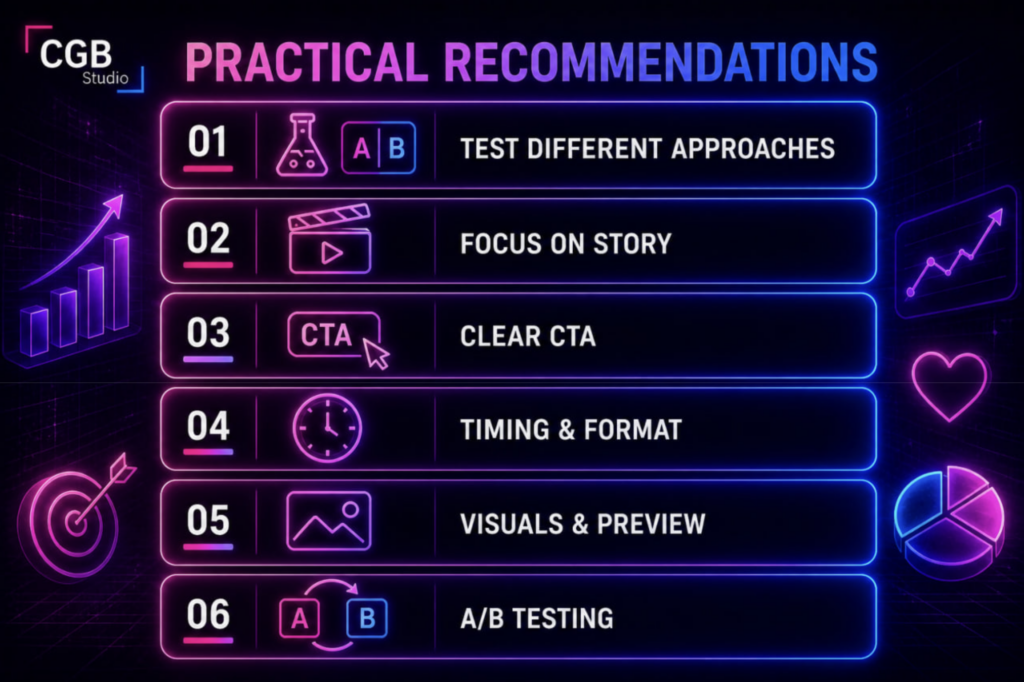
Practical UA Recommendations
1. Optimize for CVR, not CTR
High CTR doesn’t equal performance.
Always prioritize installs, CPA, and ROAS over clicks.
2. Build a Clear, Instant Problem
Your hook must be understood immediately:
- mistake
- danger
- unfair situation
If it takes more than 2 seconds — it’s too slow.
3. Create an “Intervention Moment”
The user should feel:
“I can fix this.”
That’s the conversion trigger.
4. Use Emotion-Driven CTAs
Skip generic CTAs like Install Now.
Use:
- Help him
- Save her
- Fix it
- Don’t let this happen
These directly extend the emotional hook.
5. Simplify Storytelling
The less context required, the better the performance.
Think:
- instant clarity
- zero cognitive load
- one core action
6. Format Matters
Best-performing structure:
- vertical video (9:16)
- strong hook in the first 1–2 seconds
- immediate emotional trigger
This is baseline for modern paid social / mobile UA.
Final Takeaway
Users almost never click because something is funny.
They click because they want to fix something.
If your goal is not just views, but installs and scalable performance:
Emotional hooks are almost always more effective than humor.


